SETORES

INDUSTRY

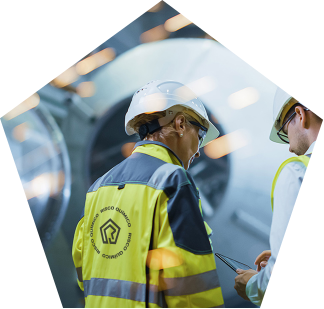
Industrial environments concentrate different sources of chemical risk, from cargo handling to production processes and maintenance stages. Risco Químico offers SAFUREX® and POLYCAPTOR® solutions for the safe neutralization and absorption of chemical contaminants, as well as specialized technical training for your team to act quickly and accurately in the face of any incident.
LOADING AND STORAGE AREA

Improper hose connections, overflowing chemical tanks, or falling containers are the most common accidents in this area. In all cases, hazardous products are spilled on the floor or contaminate equipment, walls, supports, and other nearby containers.

Production and maintenance

During production and maintenance, leaks in pipes, valves, and connections expose operators to process chemicals. Opening equipment for repair or replacement of parts is one of the moments with the highest risk of accidental contact.

Water and wastewater treatment

In chemical distribution systems used for water treatment, leaks can occur in pipes, valves, product tanks, or retention tanks. Oil leaks from machinery and chemical spills are also common during scheduled or emergency maintenance.

HOSPITAL

Hospitals deal daily with sensitive chemicals, from laboratory reagents to solutions used in disinfection and maintenance processes. Risco Químico offers SAFUREX® and POLYCAPTOR® solutions for the safe neutralization and absorption of chemical contaminants, as well as specialized technical training to enable your team to act quickly and accurately in the face of any incident.

Use of products in hospital processes

Substances such as formaldehyde are widely used in hospitals for tissue preservation, embalming, sterilization, and disinfection. Due to its carcinogenic and irritating nature, a spill during handling can release vapors that attack the eyes, nose, and respiratory tract, requiring an immediate response to contain the exposure.

Generation and disposal of biological waste

Waste biological fluids are routinely generated in various hospital sectors. Solidification of these wastes before disposal is recommended. Some of this material comes from disinfection or cleaning processes using hypochlorite, for example, after exposure to viral agents.

Equipment maintenance and cleaning

Equipment and materials that come into contact with hospital chemicals must be decontaminated before reuse. Inadequate cleaning can leave corrosive or toxic residues, putting both professionals and the sterility of subsequent processes at risk.

LABORATORY

Laboratories handle acids, bases, solvents, and reagents daily, requiring strict safety protocols. Risco Químico offers SAFUREX® and POLYCAPTOR® solutions for the safe neutralization and absorption of chemical contaminants, as well as specialized technical training for your team to act quickly and accurately in the event of any incident.

Handling and preparing reagents

On the workbench, during the weighing, dilution, and mixing of reagents, small oversights can cause splashes and spills of corrosive, reactive, or toxic substances. These incidents directly expose the professional handling the product and can damage glassware and nearby equipment.

Chemical storage

Improperly stored incompatible reagents, damaged packaging, or leaks on shelves and in chemical cabinets are common causes of laboratory accidents. Vapors released in these cases can spread rapidly in enclosed spaces, increasing the risk of inhalation.

Cleaning and decontamination of equipment

After use, glassware, countertops, and equipment that have come into contact with chemicals must be decontaminated before reuse. Inadequate cleaning can leave residues that react with the next product handled, creating a risk of cross-contamination.

MINING AND METALLURGY

Mining and metallurgical operations involve the intensive use of acids, bases, and chemical reagents in beneficiation, leaching, and ore treatment processes. Risco Químico offers SAFUREX® and POLYCAPTOR® solutions for the safe neutralization and absorption of chemical contaminants, as well as specialized technical training for your team to act quickly and accurately in the event of any incident.

Ore processing and beneficiation

During the leaching, flotation, and beneficiation stages, the ore comes into direct contact with acids, bases, and process reagents. Leaks in these stages often occur due to failures in valves, hoses, and connections, exposing operators and corroding structures near the process.

Equipment and piping maintenance

Preventive or corrective maintenance operations frequently expose professionals to chemical residues accumulated in pipes, valves, and reservoirs. Leaks during equipment opening or parts replacement are among the main causes of accidents in this environment.

Storage and transport of reagents

Storing acids, bases, and other reagents in tanks and containers requires extra caution. Leaks can occur during loading, unloading, or tank overflow, contaminating the soil and endangering the safety of the team.

WASTEWATER TREATMENT PLANTS

Water and wastewater treatment plants use chemicals such as flocculant polymers, acids, and bases daily in their treatment processes. Risco Químico offers SAFUREX® and POLYCAPTOR® solutions for the safe neutralization and absorption of chemical contaminants, as well as specialized technical training to enable your team to act quickly and accurately in the event of any incident.

Receiving and dosing chemicals

In the treatment process, products such as flocculant polymers, acids, and bases are received and dosed daily for water treatment. Failures during handling, transfer, or dosing can cause splashes and leaks, making the floor slippery and exposing operators to direct contact with the products.

Pipe and valve operation

Chemical distribution networks typically involve pipes, valves, and connections that are subject to wear and tear. Leaks at these points are one of the most common causes of accidents at the plant, and can corrode metal structures and contaminate areas near the system.

Scheduled and emergency maintenance

During maintenance, oil leaks from machinery and spills of chemicals stored in retention tanks are common. These situations require extra attention, as the system's structure may be temporarily compromised.

OIL AND GAS

Oil and gas operations involve highly corrosive and flammable products in environments that demand a rapid response to any incident. Risco Químico offers SAFUREX® and POLYCAPTOR® solutions for the safe neutralization and absorption of chemical contaminants, as well as specialized technical training for your team to act quickly and accurately in the face of any incident.

Extraction and production

During extraction and production stages, constant contact with hydrocarbons, corrosive products, and chemical process additives increases the risk of leaks in valves, flanges, and connections. A small leak under these conditions can quickly escalate, requiring immediate containment to prevent further damage.

Storage and transfer

The movement of products between tanks, pipelines, and storage units is one of the moments with the highest risk of leaks. Hose failures, tank overflows, or errors during loading and unloading can contaminate the soil and pose a fire hazard in classified areas.

Maintenance and scheduled shutdowns

During scheduled maintenance and shutdowns, equipment is opened and chemical residues are exposed, increasing the risk of direct contact with personnel. Inadequate cleaning and decontamination of pipelines and pressure vessels before reintegration into the process is one of the main causes of incidents at this time.

CONSTRUCTION

Construction sites frequently use paints, solvents, and finishing products that pose a risk of spillage and contamination. Risco Químico offers SAFUREX® and POLYCAPTOR® solutions for the neutralization and safe absorption of chemical contaminants, as well as specialized technical training for your team to act quickly and accurately in the event of any incident.

Painting and finishing

Painting, varnishing, and coating services utilize paints, solvents, and finishing products that, when spilled, leave floors slippery and difficult to clean. This type of incident is common on construction sites and can cause workers to fall, as well as contaminate nearby surfaces.

Material storage on the construction site

Paints, solvents, glues, and other chemicals are often stored in makeshift areas within the construction site. Damaged packaging or leaks during the handling of these materials can contaminate the soil and pose a risk to the team present on site.

Cleaning tools and equipment

Tools and equipment used in the application of paints and solvents need to be cleaned regularly. Improperly disposed waste from this process can accumulate in the environment and create additional risks of contamination and fire.

FREQUENTLY ASKED QUESTIONS

O que fazer em caso de derramamento de ácido?

Nesta etapa, o sistema de distribuição de produtos químicos pode ser manual ou automatizado. Em uma rede de distribuição, os acidentes geralmente envolvem vazamentos no chão provenientes de tubulações, válvulas de distribuição, tanques de produtos químicos ou de retenção, etc. Também podem ocorrer vazamentos de óleo de máquinas e derramamentos de produtos químicos durante manutenções programadas ou emergenciais.

Nesta etapa, o sistema de distribuição de produtos químicos pode ser manual ou automatizado. Em uma rede de distribuição, os acidentes geralmente envolvem vazamentos no chão provenientes de tubulações, válvulas de distribuição, tanques de produtos químicos ou de retenção, etc. Também podem ocorrer vazamentos de óleo de máquinas e derramamentos de produtos químicos durante manutenções programadas ou emergenciais.

Nesta etapa, o sistema de distribuição de produtos químicos pode ser manual ou automatizado. Em uma rede de distribuição, os acidentes geralmente envolvem vazamentos no chão provenientes de tubulações, válvulas de distribuição, tanques de produtos químicos ou de retenção, etc. Também podem ocorrer vazamentos de óleo de máquinas e derramamentos de produtos químicos durante manutenções programadas ou emergenciais.

Nesta etapa, o sistema de distribuição de produtos químicos pode ser manual ou automatizado. Em uma rede de distribuição, os acidentes geralmente envolvem vazamentos no chão provenientes de tubulações, válvulas de distribuição, tanques de produtos químicos ou de retenção, etc. Também podem ocorrer vazamentos de óleo de máquinas e derramamentos de produtos químicos durante manutenções programadas ou emergenciais.

Nesta etapa, o sistema de distribuição de produtos químicos pode ser manual ou automatizado. Em uma rede de distribuição, os acidentes geralmente envolvem vazamentos no chão provenientes de tubulações, válvulas de distribuição, tanques de produtos químicos ou de retenção, etc. Também podem ocorrer vazamentos de óleo de máquinas e derramamentos de produtos químicos durante manutenções programadas ou emergenciais.

HIRE OUR SERVICES